
Market insight
Importing Trucks from China to Nigeria: SONCAP, Form M, Duties & Lagos Port
A practical, step-by-step guide for Nigerian buyers importing a truck from China: LHD and age rules, SONCAP, Form M and PAAR, Lagos clearance, and the documents to check before you pay.
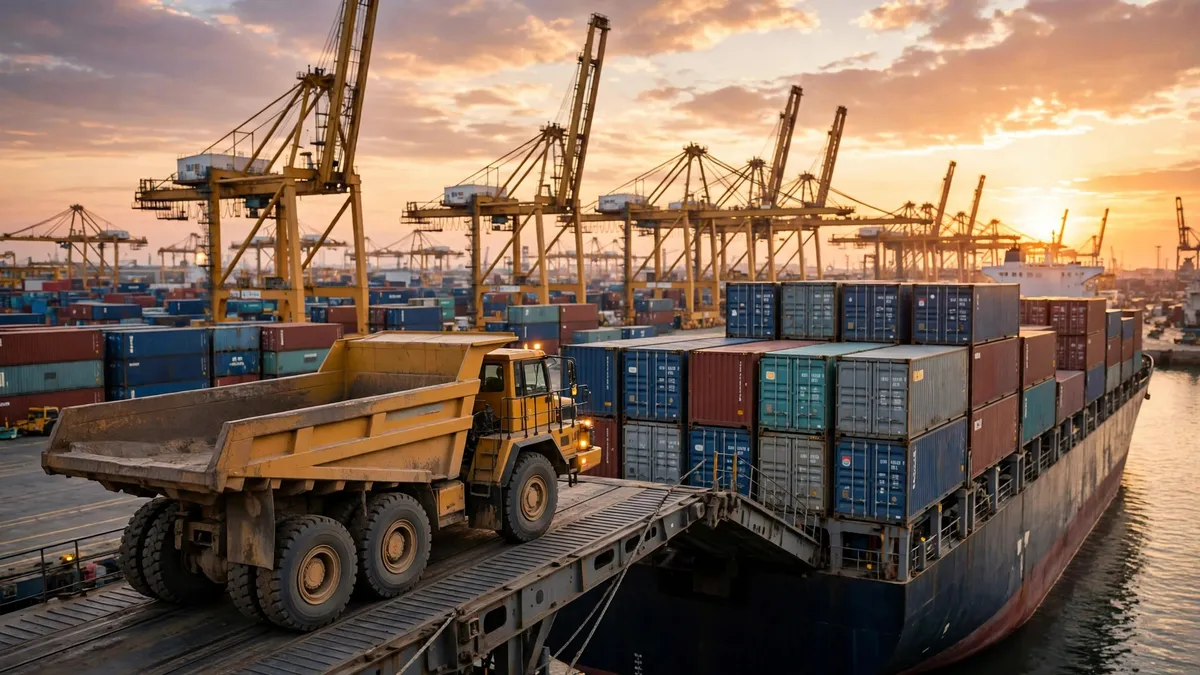
Nigeria is one of the largest African markets for Chinese trucks, but it is also one of the most document-heavy. Most delays at Lagos are not caused by shipping — they are caused by a missing certificate, a wrongly filed Form M, or a truck that should never have been shipped in the first place. This guide walks through the process in order, so you can check each step before you commit money.
1. Check the truck is eligible before you buy
Three checks come first, because they cannot be fixed after loading:
- Left-hand drive only. Nigeria requires left-hand drive vehicles. Right-hand drive trucks cannot be cleared for road use.
- Age. Nigeria Customs lists used motor vehicles more than 15 years from the year of manufacture among prohibited imports. Trade guides and clearing agents often apply a stricter working rule in practice, commonly 10–12 years, and some terminals prefer trucks 10 years old or newer. Do not rely on a single number from a blog post: confirm the current age rule with your licensed clearing agent and Nigeria Customs before you buy, and if you want a safety margin, buy 10 years old or newer.
- Emission standard. Many guides require Euro IV or above for used commercial vehicles. Confirm the emission standard on the specific truck's documents, not just the model name.
If any of these three fails, stop. A cheap truck that cannot clear is the most expensive truck you can buy.
2. The documents you will need
| Document | What it is | Who issues / files it |
|---|---|---|
| Form M | Nigeria's mandatory import registration, filed through an authorised dealer bank before shipment | Importer's bank in Nigeria |
| PAAR | Pre-Arrival Assessment Report — Customs' risk assessment and duty classification, issued after Form M is approved | Nigeria Customs Service |
| SONCAP certificate | Standards Organisation of Nigeria Conformity Assessment Programme certificate for regulated products, based on pre-shipment verification in the country of supply | Accredited inspection body, via the SON system / National Single Window |
| Commercial invoice and packing list | Value, quantity and specification of the truck | Seller |
| Bill of lading | Proof of shipment | Shipping line |
| Certificate of origin | Proof the truck originated in China | CCPIT or equivalent issuer |
Form M must be filed before shipment, not after the truck arrives. SONCAP verification happens in China, before loading — it cannot be completed retroactively at the port.
3. Step-by-step process
- Confirm eligibility (LHD, age, emission) and agree the specification in writing, including year of manufacture, VIN, engine and emission standard.
- File Form M through your bank, using the pro forma invoice and technical details from the seller.
- Obtain PAAR once Form M is approved, and check the duty classification and assessed value before the truck sails.
- Complete SONCAP pre-shipment verification in China and obtain the SONCAP certificate.
- Ship to Lagos / Tin Can Island, the main vehicle ports for Nigeria.
- Clear with a licensed clearing agent in Lagos. Customs and the National Automotive Council may physically inspect the truck to verify year, mileage and configuration.
- Pay duty and levies as assessed on the PAAR, register the truck, and only then release it for road use.
4. Costs: what to budget, and what not to assume
Import duty is calculated on the CIF value and depends on the truck's classification, age and assessed value. Published duty structures change — for example, trade guides have reported changes to the NAC levy and new surcharges during 2026 — so treat any percentage you read online as a starting point, not a quote. Ask your clearing agent for a written estimate based on the PAAR for your specific truck, and budget separately for port charges, demurrage if clearance is delayed, inland transport, and registration.
Vehicle prices on YITE Auto are contact-for-price: ask the supplier for a FOB or CIF quote for the exact truck, and confirm whether the quote includes SONCAP inspection, shipping and insurance, or only the truck itself.
5. Payment checklist before you pay
- The seller's business and the truck's VIN match every document.
- Form M details match the pro forma invoice.
- SONCAP is arranged before loading, in writing.
- The contract states who pays if the truck is rejected at clearance, and what happens to return freight.
- You have a licensed clearing agent in Lagos confirmed before the truck sails — not after it arrives.
6. Common mistakes
- Shipping first and filing Form M later.
- Buying a right-hand drive truck because it was cheaper.
- Assuming a SONCAP certificate for one truck covers another.
- Under-declaring value to reduce duty. Customs valuation and physical inspection make this a seizure and penalty risk, not a saving.
7. Before you talk price: company, TIN and bank
Before any price discussion, a Nigerian importer needs a registered company, a Tax Identification Number (TIN), and an authorised dealer bank (ADB) to file Form M and PAAR. The official import step list runs: company / TIN, then Product Certificate, then Form M via an ADB, then SONCAP, then PAAR, then clearance. Do not skip this order.
8. SONCAP in detail: Product Certificate vs SONCAP Certificate
SONCAP has two documents that play different roles, and confusing them is a common cause of delay:
- Product Certificate (PC): used when opening Form M. You need a PC before Form M can be processed.
- SONCAP Certificate (SC), based on a Certificate of Conformity (CoC) from an Independent Accredited Firm (IAF): used for PAAR and customs clearance. The exporter works with a SON-listed IAF in China; the importer activates the certificate on Nigeria's National Single Window (NSW) for PAAR. Since 27 March 2026, SONCAP and import-permit processes have migrated to the NSW platform for activation, even when certificates are still issued through the SON system.
Used automobiles are in scope for SONCAP — SON's exemption for "used products other than automobiles" does not exempt vehicles. Check the current IAF list on son.gov.ng before you engage an inspector.
9. Duties and landed-cost math, date-stamped
Rates in this section are date-stamped and must be verified with your clearing agent and the Nigeria Customs CET portal before you commit. Rates change, and Customs may revalue a truck from its own references even if your invoice says otherwise.
- How duty is assessed: on CIF value, by HS code — often 8704 for goods vehicles. Confirm the HS code for your exact truck on cet.customs.gov.ng.
- Charge names to ask your agent about: import duty, NAC / automotive levy, surcharge, CISS, ETLS and VAT, plus port, terminal and agent fees, freight and inland transport.
- Mid-2026 levy change, cited carefully: THISDAY reported in July 2026 that the used-vehicle import levy was cut from 15% to 5% from 1 July 2026, alongside a new Green Tax surcharge whose rate detail was incomplete in public reporting, with exporter claims that heavy trucks may be exempt. Treat the levy cut as reported, not as a guaranteed rate for your truck, and treat any Green Tax exemption as verify-with-agent — do not state it as fact without Nigeria Customs text.
- Illustrative landed-cost worksheet (fill in with your agent, do not use as a quote): truck FOB price (need-from-supplier) + ocean freight + insurance = CIF; CIF × (import duty + levy + surcharges + VAT as assessed on PAAR) + port / terminal fees + clearing agent fee + inland transport + registration = landed cost. Any truck price range not from your supplier is need-from-supplier, not an OWL offer.
10. Lagos ports and VehCAP caveat
The main discharge ports are Apapa and Tin Can Island in Lagos; Onne is sometimes used. Congestion and demurrage are real risks, which is why VIN, invoice and Form M must match exactly — a mismatch is what typically blocks clearance, not the port itself.
VehCAP is a newer NADDC–SON pre-shipment vehicle conformity track. Ask your clearing agent and IAF whether VehCAP applies to your used Chinese truck. Do not assume OWL units are pre-certified under VehCAP, and do not claim compliance for a specific truck unless its documents say so.
11. FAQ
- Can I ship before Form M is approved? No. File Form M through your bank before shipment, and do not load until it is accepted.
- Who pays for SONCAP? The exporter typically works with the IAF in China; confirm in your contract who pays the inspection and certificate fees.
- What duty percentage will I pay? There is no single safe percentage. It depends on CIF, HS code and the PAAR assessment — get a PAAR-based quote from a licensed Lagos clearing agent.
- Is there a single age limit? No single rule is safe to quote for all commercial trucks: 12-year and 15-year figures both appear in secondary sources, and passenger-car rules are often conflated with commercial-truck practice. Confirm by VIN and HS code with your agent before you pay a deposit.
- Apapa or Tin Can? Both are Lagos vehicle ports. Your agent and shipping line will confirm which terminal your vessel uses; the document set is the same either way.
12. How to buy through YITE Auto (Nigeria-fit path)
Browse left-hand drive dump and tractor stock, contact the supplier on WhatsApp, ask for inspection photos or video, then file Form M with your bank using the supplier's pro forma invoice, complete SONCAP with an IAF, and ship to Lagos. YITE Auto is a marketplace, not a clearing agent or bank — it does not guarantee Form M approval, foreign exchange, or port release.
References / 参考资料
- Nigerian Ports Authority — Import & Export Guidelines. https://nigerianports.gov.ng/import-export-guidelines-3/
- Standards Organisation of Nigeria — SONCAP service, PC/CoC/SC definitions and IAF list. https://son.gov.ng/soncapservice/
- SON — Mandatory migration to the National Single Window (from 2
Keep reading
Refurbished vs Used Chinese Trucks: What "Refurbished" Actually Means
"Refurbished" ranges from a fresh coat of paint to a documented mechanical rebuild. This guide explains the three levels, the inspection checklist, and the documents that prove job-readiness before payment.
Read article →
HOWO vs SHACMAN: Which Used Dump Truck Should You Buy?
A buyer-first comparison of SINOTRUK HOWO and SHACMAN for African work: engines, chassis, cabins, parts, and which jobs suit each brand — with a checklist to compare exact configurations, not just brand names.
Read article →
Heavy Truck Maintenance Guide for African Mines and Jobsites: 10 Keys to a Longer Life
Heat, dust, overloading, and rough roads punish trucks in African mines and jobsites. This guide gives 10 maintenance priorities and a service schedule.
Read article →