
Market insight
Heavy Truck Maintenance Guide for African Mines and Jobsites: 10 Keys to a Longer Life
Heat, dust, overloading, and rough roads punish trucks in African mines and jobsites. This guide gives 10 maintenance priorities and a service schedule.
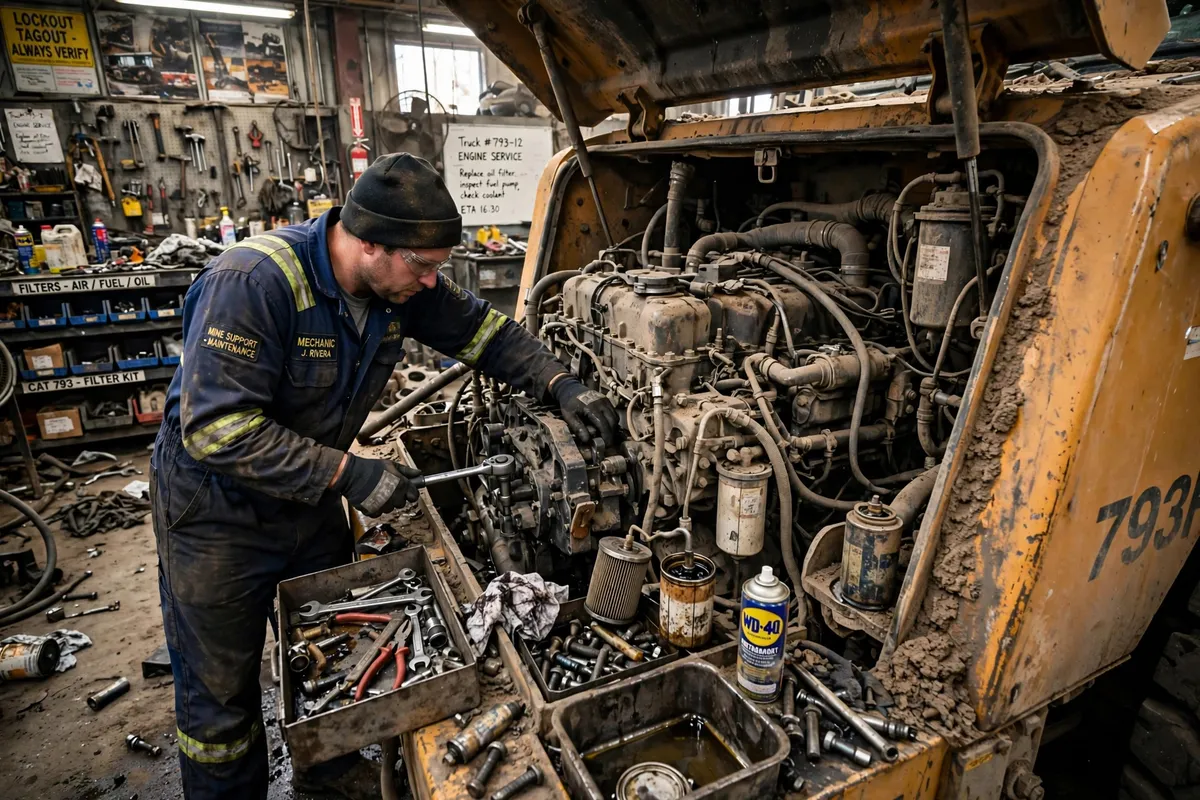
The same truck that runs a million kilometers on Chinese highways at legal loads can lose half its life in an African mine or jobsite. The truck is not at fault — the duty is different: ambient temperatures regularly above 40°C, dust concentrations dozens of times urban levels, unpaved roads, routine overloading, and repair shops hundreds of kilometers apart. Following the manufacturer's standard service intervals under these conditions is slow damage. Based on the most common failures in African fleets, here are 10 maintenance priorities.
Engine Oil and Filter: Shorten the Interval by a Third
Heat plus dust accelerates oil oxidation and contamination. Under mine duty, shorten the oil-change interval to roughly two-thirds of the standard: if the manual says 20,000 km, change at 12,000 to 15,000 km. Use heavy-duty diesel oil meeting the engine maker's specification, with high-temperature, high-shear viscosity up to standard as a minimum; change the filter with every oil change, never oil alone. A sudden rise in oil consumption often signals early piston-ring or turbocharger wear — inspect immediately rather than waiting for a noticeable power loss.
Air Filter: The Most Important Filter in African Duty
Mine and dirt-road dust is an engine's worst enemy. Check the dry air filter before every departure and clean it weekly, blowing compressed air from the inside out at moderate pressure so the filter paper is not torn. The symptoms of a clogged filter — power loss and rising fuel consumption — are often misread as a fuel-quality problem when the engine is simply starved of air. Halve the replacement interval under dusty duty, and replace immediately if the element is deformed, torn, or still restrictive after cleaning. Also inspect intake hose clamps and seals regularly: one leak makes the filter pointless.
Cooling System: The Lifeline in High Temperatures
Above 40°C, any cooling weakness leads to overheating. Check coolant level and fan-belt tension before every departure; clean dust and mud from the radiator exterior weekly, since blocked fins are the most common cause of mine-truck overheating. Use proper antifreeze coolant, not tap water long-term — scale blocks water passages and corrodes the water pump. The thermostat, water pump, and fan clutch are wear items a fleet should keep in stock. If the temperature gauge passes its normal range, stop and inspect at once: driving on to a seized engine costs dozens of times the maintenance it would have taken.
Transmission and Axle Oil: Do Not Defer Under Heavy Loads
Heavy-load hill climbing and frequent starts keep transmission and axle oil temperatures high, aging the oil far faster than legal-load duty. Inspect transmission oil quality around every 60,000 km — dark color or a burnt smell means change it. Change drive-axle oil around every 80,000 km, sooner for heavily loaded trucks. While changing oil, check seals for leaks: axle-housing seepage is common on rough mine roads, and a small leak deferred becomes a major repair. Tipper and mixer trucks with power take-off (PTO) need separate checks on PTO gear oil and driveshaft universal joints.
Braking System: The One Place Overloading Punishes Most
Overloading plus long descents is the most dangerous combination for brakes. Pad and drum wear multiplies under overload, so inspect monthly and replace pads at their wear limit — never wait until rivets score the drum. Drain air tanks daily: humid, dusty conditions put more moisture and debris into the air system, and sticking air valves cause brake delay. If fitted, exhaust brakes and hydraulic retarders must be confirmed working before long descents — they absorb most of the braking load and are the key defense against brake fade.
Tires: The Big Cost Line, and the Safety Floor
After fuel, tires are an African fleet's biggest cost line. Mine gravel cuts sidewalls, and pressure management matters more than tread choice: under-inflation accelerates shoulder wear and blowout risk, while over-inflation cuts grip and wears the tread center. Check pressures weekly, adjusted for load, and log front and rear axles separately. Rotate tires around every 20,000 km — front tires wear faster than rears as a rule. Plan replacement when tread depth falls below 3 mm; mine trucks should not run to bald. A spare tire and tools are mandatory: a mine can be hundreds of kilometers from the nearest tire shop, and no spare means no operation.
Electrical System and Battery: Heat Is the Silent Killer
Heat accelerates battery self-discharge and plate aging, and mine-truck battery life typically runs about a third shorter than in mild climates. Clean terminal oxidation monthly and coat with petroleum jelly; when starting is weak, check the battery and starter first instead of cranking until the battery is dead. Wiring harnesses chafe on rough roads — inspect mounting clips regularly and repair damage with insulating tape and corrugated sleeving. Lights and horns are safety equipment in night and dust conditions, not decoration; repair failures immediately.
Chassis and Suspension: Where Overloading Shows First
Broken leaf springs, loose U-bolts, and worn balance-shaft bushings are the classic overload failures. Inspect leaf springs for broken leaves and U-bolts for looseness monthly — loose bolts let axles shift and scrub tires. Frame rivets and welds crack under sustained vibration; focus inspections on suspension brackets and crossmember joints. Overloading cannot always be avoided, but it can be managed: trucks chronically overloaded by more than 30% lose over half their suspension and frame life, and fleet managers should weigh freight income against repair cost in total.
Genuine Parts Only: Counterfeit Parts Are the Most Expensive "Bargain"
African markets are flooded with non-genuine filters, brake pads, and clutch plates at a third to half the genuine price — but filter media too thin and friction material wrongly formulated shorten service intervals at best and damage engines and brakes at worst. Three defenses: buy through the brand's official channels or authorized dealers with proper invoices; verify anti-counterfeit codes on packaging; and keep purchase records for critical parts (filters, brake pads, turbochargers) so quality problems are traceable. Major powertrain brands such as Weichai operate more than 8,000 service outlets across 150-plus countries, with coverage in Africa's main markets — use authorized outlets for service and warranty claims before roadside shops.
Service Records and Fleet Management: Turn Experience into System
One truck can rely on its driver; a fleet needs a system. Keep a service file per truck recording date, mileage, items, and parts sources for every service, with automatic due-date reminders. Fleet managers should review three lists weekly: services due, repeat faults, and fuel-consumption anomalies. The same fault twice in a month means the service or repair missed the root cause and must be escalated. A sudden fuel-consumption rise above 10% is often the earliest signal of air-filter, tire-pressure, or injector trouble — more reliable than verbal driver reports. A system's value is that when drivers change, the trucks stay, and the standard does not walk away with the person.
Appendix: Recommended Service Schedule for Mine Duty
| Interval | Tasks |
|---|---|
| Before every departure | engine oil level, coolant level, air-filter visual check, tire appearance, lights and horn, air-tank drain |
| Weekly | air-filter cleaning, tire-pressure measurement, radiator exterior cleaning, battery terminal check |
| Monthly | brake-pad thickness, leaf springs and bolts, wiring-harness mounting, oil-consumption log |
| Every 12,000 to 15,000 km | engine oil and filter change |
| Around every 60,000 km | transmission oil inspection |
| Around every 80,000 km | drive-axle oil change |
| Around every 20,000 km | tire rotation |
Post this schedule on the fleet office wall — it beats any slogan. A truck's life in Africa is not born; it is maintained.
For parts availability and after-sales questions before you buy, see Spare Parts and After-Sales for Trucks in Africa. Matching dump vs tractor vs tanker to the job: How to Choose Dump Trucks, Tractors and Tankers. Start with the cluster hub: 5 Buyer Questions When Importing Chinese Heavy Trucks to Africa. Browse live stock: trucks for sale.
References
[1] Weichai Official, "Support" (global service network and genuine parts)
[2] HOWO Trucks, "Dump, Tractor, Cargo & Special Vehicles"
[3] The Star, "KEBS issues new verification requirement on used vehicle imports"
Keep reading
Refurbished vs Used Chinese Trucks: What "Refurbished" Actually Means
"Refurbished" ranges from a fresh coat of paint to a documented mechanical rebuild. This guide explains the three levels, the inspection checklist, and the documents that prove job-readiness before payment.
Read article →
Importing Trucks from China to Nigeria: SONCAP, Form M, Duties & Lagos Port
A practical, step-by-step guide for Nigerian buyers importing a truck from China: LHD and age rules, SONCAP, Form M and PAAR, Lagos clearance, and the documents to check before you pay.
Read article →
HOWO vs SHACMAN: Which Used Dump Truck Should You Buy?
A buyer-first comparison of SINOTRUK HOWO and SHACMAN for African work: engines, chassis, cabins, parts, and which jobs suit each brand — with a checklist to compare exact configurations, not just brand names.
Read article →