
Market insight
Refurbished vs Used Chinese Trucks: What "Refurbished" Actually Means
"Refurbished" ranges from a fresh coat of paint to a documented mechanical rebuild. This guide explains the three levels, the inspection checklist, and the documents that prove job-readiness before payment.
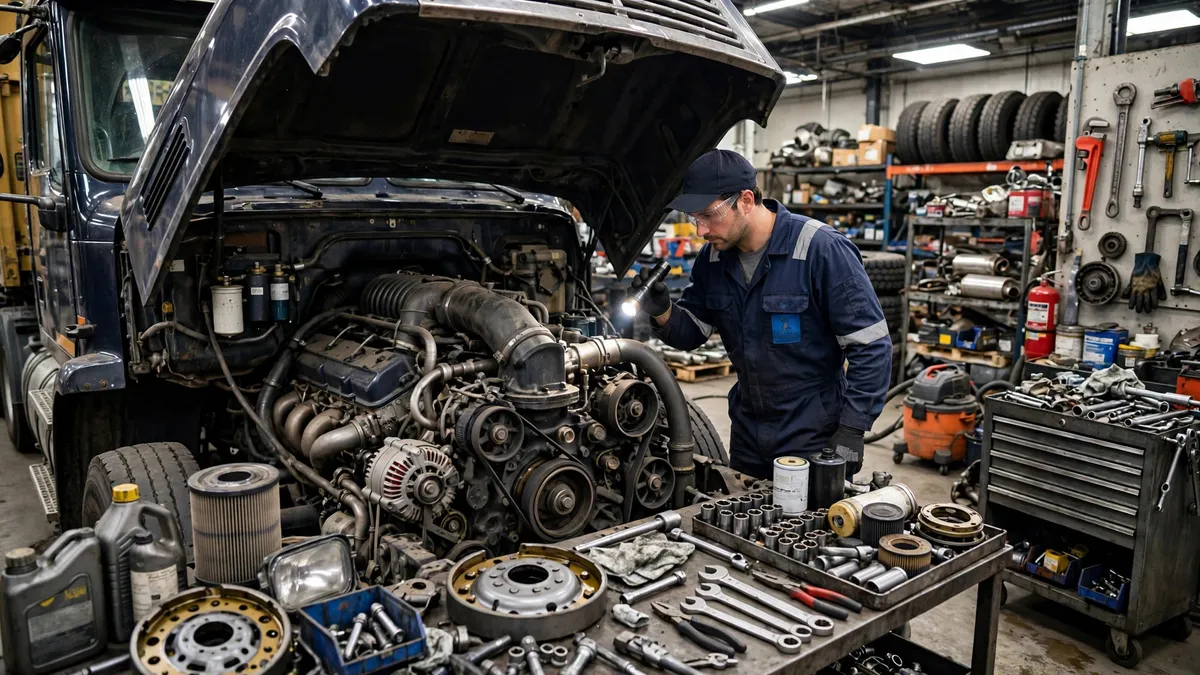
In the used-truck market, "refurbished" is used loosely. One seller's refurbished truck had a full mechanical inspection, wear parts replaced and a road test. Another seller's refurbished truck had a wash, fresh paint and new seat covers. Both listings can use the same word. The price difference between them is not a bargain — it is the difference between a truck that works and a truck that fails within weeks of heavy use.
This guide explains what to ask, what to inspect, and what documents prove the claim, so you pay for job-readiness, not appearance.
0. YITE Auto's condition labels, decoded
YITE Auto listings use the following condition taxonomy. Cards often badge several grades simply as "Refurbished", so read the detail page label, not just the card:
| Listing label | What it signals |
|---|---|
| Used as-is | Used, sold in prior-service condition with minimal or no prep promised |
| Second hand simple repair | Standard refurbished grade |
| Second hand exquisite repair | Premium refurbished grade — deeper claimed preparation than simple repair |
| Fully remanufactured | Remanufactured grade — deeper rebuild narrative, major systems opened / renewed |
| New old stock | New old stock — unused or unused-old-stock framing |
Important: the exact parts replaced at each grade vary by supplier and by unit. Any parts list in this article is a proposed buyer expectation, to be confirmed with the supplier for that VIN — it is not a published YITE Auto workshop guarantee, and no claim is made here that a given listing meets a universal rebuild recipe. Refurbishment work is done by suppliers; YITE Auto is the marketplace that hosts their listings.
0a. Used, refurbished, remanufactured — in one paragraph
A used (as-is) truck is sold mainly in the condition it left prior service, so unknown wear is the buyer's problem. A refurbished truck should have been inspected and repaired to a stated prep standard, which may range from basic service and safety wear to deeper mechanical renewals. A remanufactured truck claims a deeper rebuild of major systems. Always translate the sales word into a written scope for that VIN — refurbished is a grade claim, not a synonym for "looks new".
1. Three levels of "refurbished"
| Level | What was done | What was not done | Risk |
|---|---|---|---|
| Cosmetic only | Fresh paint, new seat covers, exterior clean | No drivetrain inspection, no brake check, no hydraulic test | Looks fine; fails within weeks of heavy use |
| Partial mechanical | Oil change, some filters, tyre check | No axle inspection, no brake wear check, no frame inspection | Better than cosmetic; significant hidden issues remain |
| Full job-ready | Documented inspection, wear-part replacement, road test, safety system validation | Nothing known critical left unaddressed | What serious buyers should require |
Ask the seller, in writing, which level the truck is. If the seller cannot describe the work in specific items — not "fully refurbished" as a slogan, but a list — treat the truck as cosmetic only until proven otherwise.
2. What "used" means, and why it is not automatically worse
A plain used truck is sold in its current condition, with cleaning and basic preparation only. That is not automatically a bad buy: a used truck with a full service history, low wear and a clean inspection can be better value than a cosmetically refurbished truck hiding worn brakes and a tired engine. The difference is evidence. A used truck's value is in its history and inspection; a refurbished truck's value is in its documented work. In both cases, no evidence means no premium — do not pay a refurbished price for an undocumented truck.
3. Inspection checklist: the systems that decide uptime
Use this checklist on the truck itself, on photos and video, or through an independent inspector. Do not accept a checklist the seller filled in alone without photos to match.
Engine and drivetrain
- Cold start behaviour: difficulty starting points to compression, fuel system or battery problems.
- Exhaust smoke: blue means oil burning, black means over-fuelling, white can mean coolant in combustion.
- Oil and coolant leaks under the engine after a run, and coolant colour — rusty or milky coolant points to head-gasket or contamination problems.
- Turbocharger shaft play and exhaust restriction.
- Gearbox operation in every gear, hot and cold.
Frame, suspension and brakes
- Frame rails for rust, cracks, welding repairs and alignment.
- Suspension, axles and steering for play, leaks and uneven wear.
- Brake wear, brake operation and ABS function — safety systems, not cosmetic items.
Body, hydraulics and electrics
- Dump bed, crane or tanker hydraulics operated through a full cycle, checking for smooth movement and leaks.
- Tyres: tread depth, even wear, and date codes. Uneven wear points to alignment or suspension problems.
- Lights, sensors, dashboard warnings and electrical systems tested, not just photographed.
History and identity
- VIN on the truck matches every document and the physical plate.
- Service history, maintenance intervals and workshop stamps are consistent, with gaps explained.
- Mileage cross-checked against inspection reports and any telematics records.
4. Documents that prove refurbishment
Before payment, a professional seller should be able to provide:
- Intake inspection report: what condition the truck was in when refurbishment started.
- Refurbishment checklist: specific items inspected, repaired or replaced.
- Parts replacement list: specific parts installed, with part numbers where available.
- Road test sign-off: driver observation notes from a loaded road test, not just "tested OK".
- Photographs: engine bay, undercarriage, frame rails, cab interior, tyre condition, and any previous damage points.
- VIN verification and, where applicable, export inspection reports.
If a seller offers a refurbished truck but cannot provide at least the checklist, parts list and photos, negotiate the price as a plain used truck — or walk away.
5. Refurbishment scope varies by seller — confirm it in writing
There is no single industry standard for "refurbished" in the Chinese used-truck export market. Some suppliers offer a simple level (cleaning, paint and basic service) and a more thorough level (mechanical inspection and wear-part replacement), but the exact scope differs from supplier to supplier. Before you pay, get the supplier's scope in writing for your truck: which systems were inspected, which parts were replaced, what was tested, and what warranty or after-sales support, if any, applies after delivery. A scope confirmed in writing is worth more than a refurbished label on a listing.
Proposed distinction, to be confirmed with the supplier (not a guarantee): simple repair is typically framed as service + safety wear + cosmetics, while exquisite repair is framed as broader mechanical renewals. Do not treat this as a default parts list — ask the supplier to confirm, for your VIN, which of these actually apply, and mark each major assembly as inspected and retained, repaired, rebuilt, or replaced, with dates.
Systems to cover in that written scope: engine, gearbox, clutch, axles, brakes / air, frame / chassis, electrics, cab, tyres / battery / filters, body / hydraulics (dump).
5a. Fake-refurb red flags
- Wet paint over rust or frame cracks.
- A claim of a "new engine" with no paperwork.
- Mismatched VIN plates.
- Refusal to do a live video walkaround.
- Pressure to pay before any inspection.
Any one of these is a reason to pause and re-price the truck as used as-is risk, or to walk away.
5b. Copy-paste WhatsApp checklist to send the supplier
Copy this to the supplier before you pay a deposit:
For VIN [___], please confirm in writing, per system (engine, gearbox, clutch, axles, brakes/air, frame, electrics, cab, tyres/battery/filters, body/hydraulics): inspected and retained, repaired, rebuilt, or replaced — with dates and part numbers where replaced. Please send before / during / after photos or workshop video, a cold-start video, and a road / hydraulic function video. Please confirm warranty or after-sales terms and exclusions in writing, if any.
If the supplier will not answer this checklist, price the truck as used as-is risk. For high-stakes purchases, consider a buyer-arranged independent inspection.
6. Payment and protection
- Pay against documents and evidence, not against photos alone.
- Confirm in the contract who pays for return or repair if the truck arrives in a materially different condition from the documented scope.
- Confirm the truck's condition, VIN, year, emission standard and destination-country eligibility (for example, left-hand drive and age rules for Nigeria) before shipment.
- Keep the inspection report, checklist and photos with the contract — they are your evidence if a dispute arises.
7. FAQ
- What does "second hand exquisite repair" mean? It is the buyer-facing label for the premium refurbished grade on YITE Auto listings (alongside "second hand simple repair" for standard refurbished), both often badged simply as Refurbished on cards. It signals deeper claimed preparation than simple repair, but the exact parts replaced still vary by supplier and unit — ask for the itemised list for that VIN.
- Remanufactured vs refurbished? Remanufactured claims a deeper rebuild of major systems; refurbished claims inspection and repair to a stated prep standard. Both still need a written scope.
- Can I trust photos? Photos prove appearance, not mechanical condition. Ask for the VIN-linked work list, before / after photos or video, and a cold-start or function video.
- What if the supplier won't share records? Treat the truck as used-as-is risk, re-price accordingly, or walk away — and consider an independent inspection if the stake is high.
References / 参考资料
- YITE Auto — used and refurbished truck listings and supplier verification. https://www.yiteauto.com/en/trucks
- Used truck inspection practice — engine, frame, brake and hydraulic checks summarised from buyer inspection guides. https://www.snailtruckglobal.com/howo-truck-sale-tell-if-used-howo-truck-truly-job-ready.html
- Pre-purchase inspection checklist — mechanical, electrical, tyre and paperwork checks. https://www.motortopia.com/the-true-value-of-used-trucks-what-to-check-before-buying/
Internal links
Keep reading

Importing Trucks from China to Nigeria: SONCAP, Form M, Duties & Lagos Port
A practical, step-by-step guide for Nigerian buyers importing a truck from China: LHD and age rules, SONCAP, Form M and PAAR, Lagos clearance, and the documents to check before you pay.
Read article →
HOWO vs SHACMAN: Which Used Dump Truck Should You Buy?
A buyer-first comparison of SINOTRUK HOWO and SHACMAN for African work: engines, chassis, cabins, parts, and which jobs suit each brand — with a checklist to compare exact configurations, not just brand names.
Read article →
Heavy Truck Maintenance Guide for African Mines and Jobsites: 10 Keys to a Longer Life
Heat, dust, overloading, and rough roads punish trucks in African mines and jobsites. This guide gives 10 maintenance priorities and a service schedule.
Read article →