
Market insight
How to Order a Chinese Heavy Truck: 7 Steps from Inquiry to Port Delivery
Ordering a Chinese heavy truck for the first time? Follow 7 steps from inquiry to port delivery: quotation, contract, payment, inspection, and shipping.
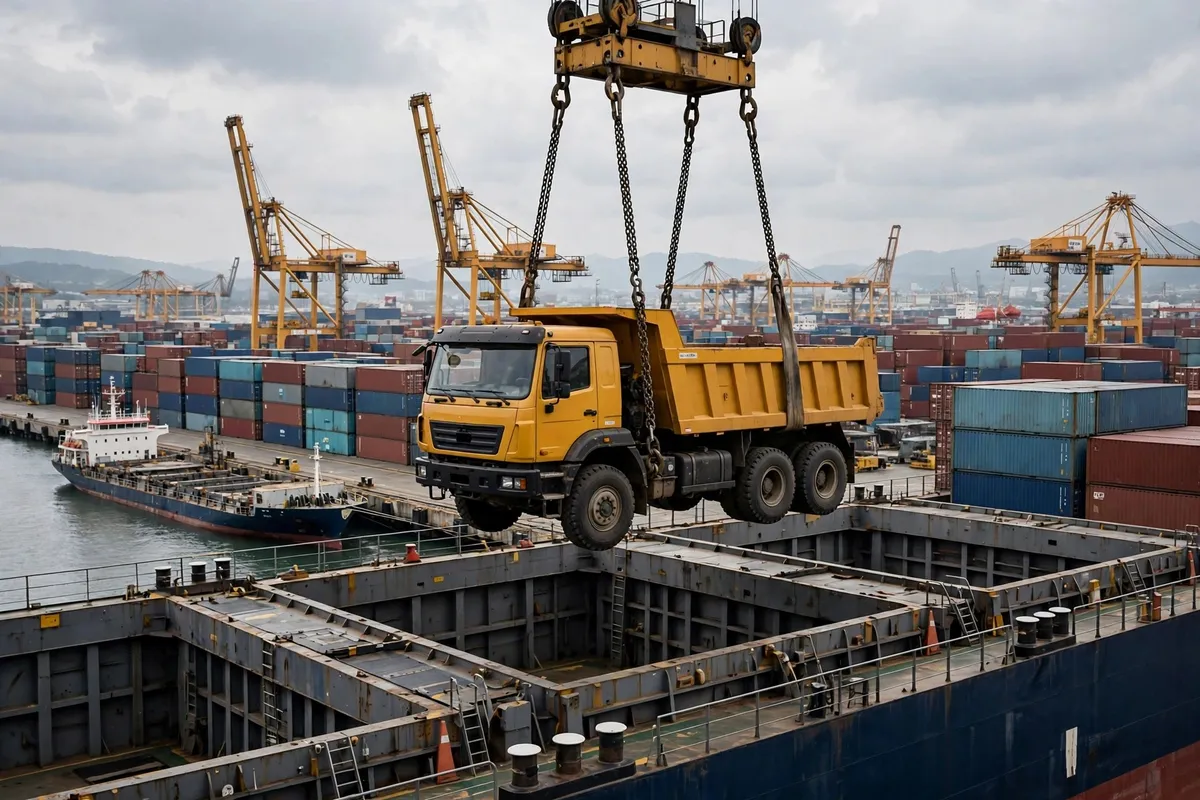
First-time buyers of Chinese heavy trucks usually do not get stuck on price — they get stuck on process: what to discuss first, how to pay, and when the truck can ship. Here is the full ordering process in 7 steps, with what the buyer should confirm at each one.
Step 1: Inquiry — state your requirements completely.
Do not just ask "how much?" State everything at once: truck type (tractor, dump truck or tanker), drive side (left- or right-hand drive), horsepower range, load and road conditions, quantity and destination port. The more specific the inquiry, the more accurate the quotation and the less back-and-forth.
Step 2: Compare quotations — compare total price, not unit price.
When several quotations arrive, align them first: is it ex-works, FOB or CIF? Does it include freight, insurance and export documentation fees? Break every quotation down to the same basis before comparing — otherwise the lowest price may simply be the one with the most items missing.
Step 3: Contract — put the specification in an annex.
Beyond the contract itself, there must be a specification annex: engine, gearbox, rear axle, tyre specification, cab configuration, drive side, colour and onboard tools. A configuration promised verbally but not written into the annex cannot be checked at delivery.
Step 4: Payment — pay in stages, never all at once.
A common rhythm is staged payment: a deposit on signing, with the balance paid before dispatch or before loading. Write the percentages into the contract and confirm the receiving account matches the contracting party. Any request to pay a private account should be verified first.
Step 5: Inspection — look at the truck before loading.
If possible, inspect before loading: check the VIN against the contract, and examine the body, tyres, lights, instruments, and engine running condition. If you cannot be there, ask the supplier for a video inspection focusing on the VIN, odometer and key components.
Step 6: Shipping — confirm schedule and loading method.
Confirm the sailing schedule, load port, destination port and loading method (Ro-Ro or bulk/break-bulk). Ro-Ro suits complete vehicles; bulk suits disassembled or out-of-gauge vehicles. Once you have the bill of lading number, you can track the shipment with the shipping line.
Step 7: Documents and clearance — have them ready before arrival.
Before the truck reaches the destination port, prepare the clearance documents: sales contract, commercial invoice, bill of lading, certificate of origin, vehicle registration and deregistration certificates, and inspection report. Without complete documents, the truck cannot be released at port and storage charges pile up.
Conclusion
the process itself is not complicated — the confirmations at each step are. Work through these 7 steps one by one and even a first order avoids most pitfalls. On YITE Auto you can filter listed trucks by brand, type and drive side, and contact sellers via WhatsApp to start from step one.
Where each step usually stalls
Step 1, inquiry: vague requirements mean three rounds of questions before a quotation. State type, drive side, horsepower range, load and road conditions, quantity and destination port once, and the quotation aligns first time.
Step 2, comparison: comparing prices before aligning the basis puts ex-works against CIF — the lowest price is usually the one with the most items missing. Break every quotation down to the same basis first.
Step 3, contract: a missing specification annex means nothing to check at delivery. Engine, gearbox, rear axle, tyre specification, cab configuration, drive side, colour and onboard tools — none of it on verbal promises alone.
Step 4, payment: an unclear balance milestone stalls loading — the truck is ready but the money is not. Fix deposit percentage, balance milestones and the receiving account matching the contracting party at signing.
Step 5, inspection: skipping video inspection when you cannot attend means problems surface only at port. Film to the inspection checklist, focusing on the VIN, odometer and key components.
Step 6, shipping: an unconfirmed sailing leaves the truck waiting in the yard. Ro-Ro or break-bulk, load port, destination port and schedule belong in the timeline at ordering time.
Step 7, clearance: documents prepared only after arrival rack up storage charges daily. Sales contract, commercial invoice, bill of lading, certificate of origin, registration and deregistration certificates, inspection report — ready before loading.
Reference timeline: 45 to 60 days
| Phase | Time |
|---|---|
| Inquiry and comparison | About 1 week |
| Contract and production scheduling | 1 to 2 weeks |
| Ocean shipping | 3 to 5 weeks |
| Clearance and registration | 1 to 2 weeks |
Every week lost at one step is a week lost overall — and every day confirmed early at one step is a day saved overall.
References
[1] International Chamber of Commerce, "ICC releases Incoterms® 2020"
[2] The Star, "KEBS issues new verification requirement on used vehicle imports"
[3] ZIM, "Import of Used Cars to West Africa"
Before you pay: Used Chinese Heavy Truck Inspection Checklist. Choose TT / LC / installments: Africa Truck Payment and Financing Guide. Estimate clearance: Import Duty Comparison (NG / KE / ZA). Full buyer frame: 5 Buyer Questions. Browse trucks for sale.
Keep reading
Refurbished vs Used Chinese Trucks: What "Refurbished" Actually Means
"Refurbished" ranges from a fresh coat of paint to a documented mechanical rebuild. This guide explains the three levels, the inspection checklist, and the documents that prove job-readiness before payment.
Read article →
Importing Trucks from China to Nigeria: SONCAP, Form M, Duties & Lagos Port
A practical, step-by-step guide for Nigerian buyers importing a truck from China: LHD and age rules, SONCAP, Form M and PAAR, Lagos clearance, and the documents to check before you pay.
Read article →
HOWO vs SHACMAN: Which Used Dump Truck Should You Buy?
A buyer-first comparison of SINOTRUK HOWO and SHACMAN for African work: engines, chassis, cabins, parts, and which jobs suit each brand — with a checklist to compare exact configurations, not just brand names.
Read article →