
Market insight
How to Verify a Chinese Truck Supplier Before You Pay
A step-by-step guide to checking a Chinese truck supplier before payment: business license and export record checks, video inspection of the actual unit, third-party inspection, TT and LC payment terms, scam red flags, and the documents to demand before any money moves.
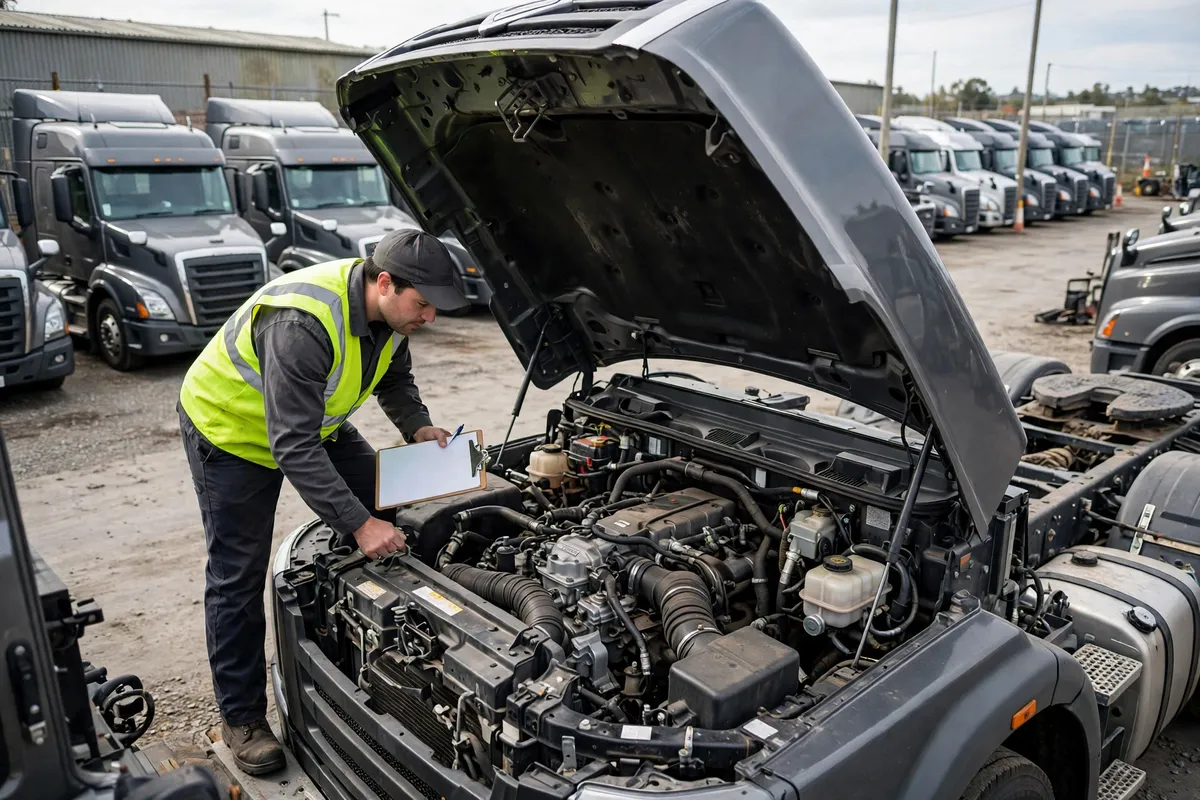
A Chinese truck is a large purchase, and it is usually paid for before the buyer ever touches it. That is normal in this trade — but it means the verification has to happen before the money moves, not after. This guide covers the checks that cost little or nothing and catch most problems: the license, the export record, the actual truck on video, an independent inspection, and payment terms that protect both sides.
0. Quick verdict
| Check | What it proves | Cost | Do it when |
|---|---|---|---|
| Business license check | The company legally exists and matches the name on the contract | Free | Before any discussion of payment |
| Export record check | The company has actually exported vehicles before | Free to low | Before shortlisting a supplier |
| Video call with the actual unit | The truck exists and matches the listing | Free | Before paying any deposit |
| Third-party inspection | Condition, identity and documents verified independently | Paid, worth it | Before the balance payment |
| LC payment | The bank releases money only against shipping documents | Bank fees | Large orders or first orders |
| TT with staged payments | Deposit plus balance against documents | Low | Repeat orders with a trusted supplier |
No single check is enough. Use them together.
1. Start with the business license
Every legal Chinese company has a business license with a Unified Social Credit Code — an 18-character code that identifies the company. Ask the supplier for:
- The full registered company name, in Chinese and in English
- The Unified Social Credit Code
- A copy or photo of the business license
Then check the code on China's National Enterprise Credit Information Publicity System, the official government registry. The registry shows whether the company exists, when it was registered, its registered capital, its legal representative and whether it has any abnormal business records. A supplier who cannot or will not give you a credit code is a supplier you do not pay.
Match the name on the license to the name on the contract, the invoice and the bank account. If the contract names one company and the bank account belongs to another, stop and ask why — that is one of the most common features of a scam.
2. Export record and track record
A company that has exported trucks before leaves traces:
- Export history: ask which countries the supplier has shipped to, and for how long. A supplier with African deliveries can usually name ports, clearing agents and past buyers.
- References: ask for two or three past buyers you can contact — ideally in your region. A real supplier expects this question. A supplier who refuses, or who offers only screenshots of chats, is telling you something.
- Online presence: check the supplier's website, business profiles and listings. Look for consistency: the same company name, the same address, the same contact details, over time. A website created last month with stock photos and no verifiable address deserves extra care.
- Premises: ask for a video walkthrough of the yard or warehouse, not just photos of trucks. A supplier with real stock can show it live.
None of these proves honesty by itself. Together, they make a fake supplier's job much harder.
3. See the actual unit on video
Never pay for a truck you have only seen in photos. Before any deposit, ask for a live video call showing the actual unit — not a similar truck, not a catalogue photo:
- The engine plate and chassis number, read out on camera
- The odometer or hour meter
- The cab, sleeper, tyres and body, front to back
- The engine starting and running, with no editing
- Any damage, rust or repairs, shown honestly
Ask the supplier to hold up a card with your name and the date during the call. A real truck in a real yard can do this in five minutes. A supplier who stalls, sends pre-recorded video, or shows a different truck is a supplier to walk away from.
4. Third-party inspection
For any used or refurbished truck — and for a first order of any size — pay for an independent inspection. International inspection firms operate in China and will inspect the specific unit, verify the chassis and engine numbers against the documents, test the main systems and issue a written report with photos. The cost is small next to the price of a truck, and it is the only check that is independent of the seller.
What to ask the inspector to cover:
- Chassis and engine numbers against the registration and export documents
- Engine start, idle, smoke and leaks
- Gearbox, clutch, brakes and steering
- Tipper hydraulics, tank, drum or crane, as fitted
- Tyres, suspension and chassis for cracks and repairs
- Whether the truck matches the listing — model, year, drive side, emission standard
Do not pay the balance until you have the inspection report. If the report contradicts the listing, renegotiate or walk away.
5. Payment terms: TT vs LC
Two payment methods dominate this trade:
- TT (telegraphic transfer): a bank transfer, usually staged — a deposit to start the order, the balance against shipping documents such as the bill of lading. TT is fast and cheap, and it is the normal method for repeat orders with a supplier you already trust.
- LC (letter of credit): your bank promises to pay only when the supplier presents the agreed documents — bill of lading, commercial invoice, packing list, inspection certificate. An LC costs more in bank fees and takes longer to arrange, but it is the safer method for a first order or a large order, because the money only moves against documents.
Whatever the method, agree it in writing before payment: the exact amounts, the trigger for each payment, the documents required, and what happens if the truck fails inspection. Never pay the full amount in advance to a supplier you have not verified, and never pay to a personal bank account or a company name that does not match the contract.
6. Red flags
Walk away — or at least stop and verify much harder — if you see any of these:
- The price is far below every other quote for the same truck
- The supplier pressures you to pay today, or the truck "will be sold" if you wait
- The bank account name does not match the contract company name
- The supplier refuses a live video call or a third-party inspection
- The supplier asks for payment to a personal account, or by crypto or gift cards
- The company has no verifiable address, no credit code, or a website created weeks ago
- Documents are inconsistent: different company names, different chassis numbers, or photocopies only
- The supplier cannot name a single past buyer in Africa
One red flag is a warning. Two or more is a reason to stop.
7. Documents to demand before payment
Before any money moves, get these in writing:
- The sales contract with the full company name, the exact truck (model, year, chassis and engine numbers), the price and the payment terms
- The business license and Unified Social Credit Code
- The commercial invoice and packing list matching the contract
- The inspection report, with photos, for the actual unit
- Photos and video of the actual unit, including engine plate and chassis number
- Confirmation of the shipping terms — FOB or CIF — and the loading port
- The export documents the truck will travel with, including the certificate of origin where required
- The bill of lading, or a copy of it, before the balance payment
Keep copies of everything. If anything goes wrong, the paper trail is your only leverage.
8. FAQ
- Is it safe to pay a deposit before seeing the truck? Only after the license check and a live video call on the actual unit. Never pay a deposit to a supplier you have not verified at all.
- TT or LC — which should I choose? TT for repeat orders with a trusted supplier; LC for a first order, a large order, or any supplier you have not worked with before.
- How much does a third-party inspection cost? It varies by firm and location, and it is quoted per unit — ask the inspection firm directly. It is always small compared with the price of a truck.
- What if the inspection finds problems? Renegotiate the price, ask for the faults to be fixed with proof, or walk away. An inspection that finds nothing wrong is also useful — it confirms the listing.
- Can I verify a supplier myself without an agent? Yes — the license check, the video call and the reference checks are all free and you can do them yourself. The third-party inspection is the one step worth paying a professional for.
References
- National Enterprise Credit Information Publicity System — official Chinese company registry. https://www.gsxt.gov.cn/
- SGS — pre-shipment and vehicle inspection services. https://www.sgs.com/
- Bureau Veritas — inspection and certification services. https://www.bureauveritas.com/
- TÜV — inspection and certification services. https://www.tuv.com/
- YITE Auto — truck listings, contact-for-price. https://www.yiteauto.com/en/trucks
Internal links
Keep reading

Tractor Head / Prime Mover Buying Guide for Africa: 6x4 vs 4x2, Trailers and the Pre-Payment Checklist
A buyer-first guide to tractor heads (prime movers) for African work: 6x4 vs 4x2, fifth wheel and GCW, axle ratios, matching flatbed, tipper, tanker and lowbed semi-trailers, sleeper cabs and RHD — with a pre-payment checklist.
Read article →
SHACMAN Buying Guide: F3000, X3000 and H3000 for African Work
A buyer-first guide to the SHACMAN range for African work: F3000, X3000 and H3000, dump vs tractor, Weichai and Cummins engines, and how to match the exact configuration to construction, mining and long-haul jobs — with a pre-payment checklist.
Read article →
October Market: Foton Meets Its African Partners While China Heavy-Truck Exports Keep Growing
A bilingual market brief for African buyers, built on two October stories: the Foton Africa Partners Conference on 29 October, and China's October heavy-truck market figures.
Read article →