
Market insight
Shipping Chinese Heavy Trucks: FOB / CIF Costs Explained
A buyer-first guide to shipping Chinese heavy trucks by sea: what FOB, CFR and CIF actually cover under Incoterms 2020, who pays freight and insurance, where risk transfers, and how to build a landed-cost quote — with an illustrative cost structure and no invented prices.
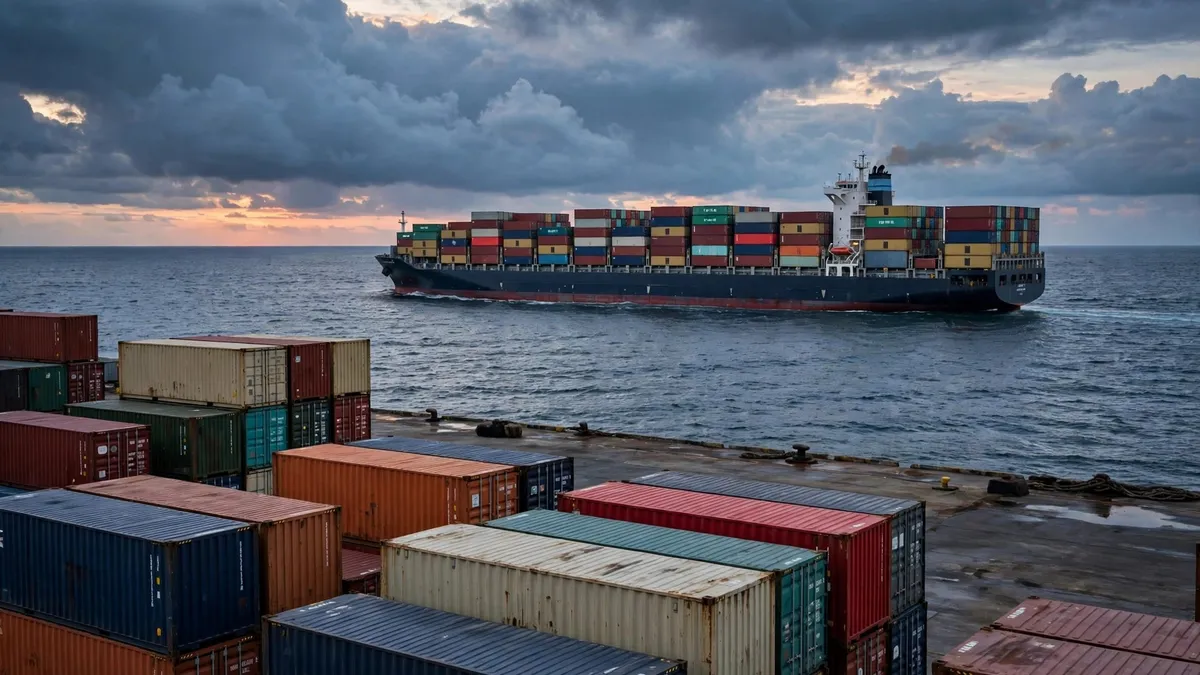
The cheapest truck quote is often the one that leaves out the most. For a Chinese heavy truck shipped to Africa, the difference between FOB, CFR and CIF is not a discount — it is a list of who pays for what, and who carries the risk while the truck is at sea. This guide explains the three terms under Incoterms 2020, shows how to build a landed-cost quote, and flags the mistakes first-time importers make most.
0. Incoterms in one paragraph
Incoterms are 11 standard three-letter trade terms published by the International Chamber of Commerce (ICC). The current edition is Incoterms 2020, in force since 1 January 2020. Each term answers three questions: who pays the main carriage, who must insure the goods, and where the risk of loss or damage passes from seller to buyer. Four of the 11 terms are for sea and inland waterway transport only: FAS, FOB, CFR and CIF. The rest cover any mode of transport. Always write the edition year in the contract — "CIF Mombasa, Incoterms 2020" — so there is no argument about which edition applies.
1. FOB, CFR and CIF compared
| FOB (Free on Board) | CFR (Cost and Freight) | CIF (Cost, Insurance and Freight) | |
|---|---|---|---|
| Full name | Free on Board, named port of shipment | Cost and Freight, named destination port | Cost, Insurance and Freight, named destination port |
| Seller pays | Delivery onto the vessel, export clearance, loading | All of FOB, plus ocean freight to destination port | All of CFR, plus marine cargo insurance |
| Buyer pays | Ocean freight, insurance, unloading, import clearance and duties | Insurance, unloading, import clearance and duties | Unloading, import clearance and duties |
| Insurance | Buyer arranges, if wanted | Buyer arranges, if wanted | Seller must arrange minimum cover (Institute Cargo Clauses C under Incoterms 2020) |
| Risk transfers to buyer | When goods are on board the vessel at origin | When goods are on board the vessel at origin | When goods are on board the vessel at origin |
| Best for | Buyers with their own freight forwarder or insurer | Buyers who want freight included but keep insurance control | First-time buyers who want one all-in sea price |
2. The point most buyers get wrong
Under FOB, CFR and CIF alike, the risk of loss or damage passes to the buyer when the goods are loaded on board the vessel at the origin port — even under CIF, where the seller is still paying the freight and the insurance to the destination. Paying for freight is not the same as carrying the risk. That is why the insurance clause matters: CIF requires only minimum cover (Clause C) unless you agree otherwise in the contract. Minimum cover protects against major perils; it may not cover partial damage such as water damage. If the truck matters to you, ask in writing what the insurance covers and consider topping it up to all-risks cover (Clause A) — and confirm who claims if something goes wrong at sea.
3. What is included — and what is not
| Cost line | FOB | CFR | CIF |
|---|---|---|---|
| Truck price at the factory / yard | Included | Included | Included |
| Inland transport to the load port in China | Seller | Seller | Seller |
| Export customs clearance | Seller | Seller | Seller |
| Loading on board | Seller | Seller | Seller |
| Ocean freight to destination port | Buyer | Seller | Seller |
| Marine cargo insurance | Buyer | Buyer | Seller (minimum cover) |
| Destination port charges and unloading | Buyer | Buyer | Buyer |
| Import duty, taxes and clearance | Buyer | Buyer | Buyer |
| Inland transport from the destination port | Buyer | Buyer | Buyer |
"Included" means the seller's quoted price covers it — not that it is free. A CIF quote that looks higher than an FOB quote is often cheaper once you add the buyer's own freight and insurance to the FOB price.
4. The other terms you will see
- EXW (Ex Works): the buyer collects the truck at the seller's premises and pays for everything from there on, including export clearance. Cheapest headline price, most work for the buyer — rarely the right choice for a first import.
- FAS (Free Alongside Ship): the seller delivers the truck alongside the vessel; the buyer loads and pays onward. Uncommon for trucks.
- CPT / CIP: the "any mode" equivalents of CFR / CIF. CIP adds seller-arranged insurance at all-risks level (Clause A) under Incoterms 2020 — a real difference from CIF's minimum cover.
- DAP / DPU / DDP: the seller delivers to a named place, and under DDP also pays import duty. Convenient, but the seller prices the risk into the quote — ask for the breakdown.
5. How to build a landed-cost quote
Ask the supplier for a written breakdown, line by line, so you can compare quotes that use different terms:
- Truck price, exact model and year, condition (new / used / refurbished).
- Incoterm, named port and edition — for example, "CIF Mombasa, Incoterms 2020".
- Ocean freight and insurance, stated separately if possible.
- Pre-shipment inspection and conformity certificate, if your country requires one.
- Destination port charges and unloading.
- Import duty, excise and VAT — estimated by your clearing agent on the assessed customs value, not on the invoice alone.
- Clearing agent fee and inland transport from the port.
Landed cost = truck price + freight + insurance + inspection + port charges + duty + clearance + inland transport. Any quote that gives you one number with no breakdown cannot be compared with another quote. Prices on YITE Auto are contact-for-price; freight and insurance are quoted per shipment and change with the route, the season and the vessel.
6. Before you sign: checklist
- Is the Incoterm, the named port and the edition year written in the contract?
- Does the quote state what is included and what is excluded, line by line?
- What insurance cover is included, and who claims if the truck is damaged at sea?
- Which documents come with the shipment — bill of lading, commercial invoice, packing list, inspection or conformity certificate?
- Who is the clearing agent at the destination port, and have they confirmed the current duty estimate?
- What is the sailing schedule, and what happens if the vessel is delayed?
7. FAQ
- Is CIF always better than FOB? No. CIF is simpler and suits first-time buyers; FOB suits buyers with their own forwarder or insurer, who can often buy freight and insurance cheaper than the seller's package.
- Does CIF insurance cover everything? No — Incoterms 2020 requires only minimum (Clause C) cover under CIF unless you agree more. Ask what is covered, in writing.
- Who pays import duty under CIF? The buyer. CIF covers cost, insurance and freight to the destination port only — duty, taxes and clearance are always the buyer's, unless the term is DDP.
- Can I change from FOB to CIF after the contract? Only by agreement with the seller, and the price will change — freight and insurance move from your account to the seller's.
- How long does the sea leg take? It depends on the route and the vessel; ask the supplier or forwarder for the current sailing schedule for your port — this article does not quote transit times, because they change.
References
- International Chamber of Commerce (ICC) — Incoterms 2020 rules
- Incoterms 2020 guide — FOB, CFR and CIF compared, risk transfer and insurance
- Incoterms 2020 explained — all 11 rules, risk and insurance levels
- YITE Auto — trucks for sale, contact-for-price
Related reading
- How to order a Chinese truck step by step
- Africa truck payment and financing guide
- Importing Chinese heavy trucks to Africa: 5 buyer questions
- Nigeria, Kenya, South Africa: import duty and clearance cost comparison
- Importing trucks from China to Nigeria: SONCAP, Form M, duties and Lagos port
- Trucks for sale
- Contact us
Keep reading
Importing Chinese Heavy Trucks to Kenya and Tanzania: Process, Duties and Port Clearance
A buyer-first guide to importing Chinese heavy trucks into Kenya (Mombasa) and Tanzania (Dar es Salaam): right-hand drive and age rules, pre-shipment inspection, duties and taxes, port clearance and registration — with the conflicting Tanzania age rules flagged and a "confirm with a licensed clearing agent" caveat throughout.
Read article →
HOWO TX Buying Guide: Which Variant Fits Your African Working Conditions?
A buyer-first guide to the SINOTRUK HOWO TX range for African work: tractor, dump, tanker, mixer and crane variants, engines and drivelines, and how to match the exact configuration to construction, mining and long-haul jobs — with a pre-payment checklist.
Read article →
Refurbished vs Used Chinese Trucks: What "Refurbished" Actually Means
"Refurbished" ranges from a fresh coat of paint to a documented mechanical rebuild. This guide explains the three levels, the inspection checklist, and the documents that prove job-readiness before payment.
Read article →